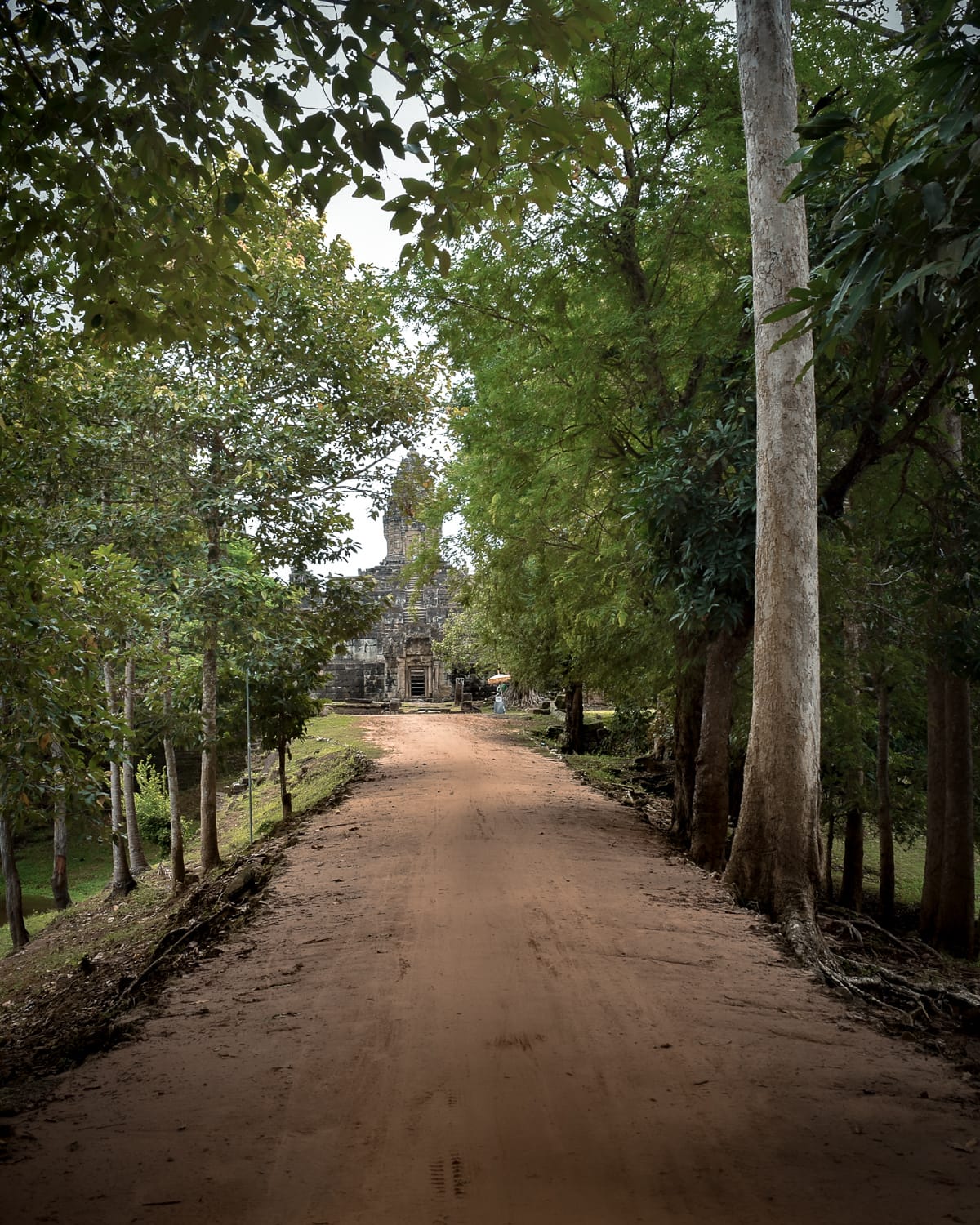
Budgeting for a trip to Angkor, Cambodia

Budgeting for a trip to Angkor, Cambodia

Cambodia

“The best part about traveling through South East Asia is the affordability”

As true as this is for the citizens of the western world, the fact remains that for travellers from many other countries, visiting South East Asian countries requires a bit of pre-travel budgeting. And here’s all that we learnt while we explored the ancient temples of northern Cambodia.

Flights

  • Air Asia is the best airline to get in and out of Cambodia (especially from India)
  • If you book well in advance, you should be able to find round-trip tickets for as low as INR 14,000 (USD 200) per person
  • Search on Skyscanner and Kayak, and then book on MMT or Goibibo to get the ease of booking on an Indian travel website

Tip: If you are on a single PNR from origin to destination, you will be issued all boarding passes at the origin – you won’t need to worry about transit visas in those cases, generally (for e.g., Air Asia, these tickets are called “fly-thru”) – but it’s best to check with the airline/embassies about requirements for a transit visa


Hotels

  • The most attractive part of traveling in South East Asia is DEFINITELY the hotel pricing!
  • A double room at a small boutique hotel usually sells at USD 15 or INR 1,000 a night
  • Dorms are even cheaper at INR 300 (under USD 4)
  • We stayed at the Mudra Angkor Boutique Hotel

Activities

How many days are required to see the Angkor Wat and other temples? It is very easy to spend upto a week in the region scouting the endless temple complexes.

Tip: Devote at least two to three days for a fruitful experience. Most hotels offer packages to visit the Angkor temples in their own tuktuks; streetside tuktuks offer a variety of day-trip itineraries for you to pick from


The day-trips are of these types:

  • Small circuit – covering the Angkor Wat, Angkor Thom (including Bayon, Baphuon and the terraces), Ta Prohm, Phnom Bakheng and Prasat Kravan (a tiny jungle temple) – cost: USD 15 (INR 1,000)
  • Big/Grand circuit – Small circuit, you can also visit the Preah Khan temple, Neak Pean, Ta Som, East Mebon and the temple of Pre Rup – cost: USD 25 (~INR 1,600)
  • For an additional charge of USD 10 (INR 1,000), the temple of Banteay Srei can also be added to the grand circuit
  • Add USD 5 (INR 350) for catching the famous sunrise at Angkor Wat (remember to ask your hotel to pack you a breakfast picnic so you can eat after the sunrise at Angkor Wat)
  • Beng Mealea, a marvellous ruin, is about 60 km outside the Siem Reap area – cost USD 40 (INR 2,600) – but believe us, you cannot miss it! This normally includes a visit to the Bakong Temple too.


Apart from the temple-run, you can also do a lot of other fun things in the town of Siem Reap:

  • There is a cultural centre in the town
  • Apsara dance and buffet dinner
  • Visit the floating markets at Tonle Sap, south of Siem Reap
  • Cooking classes are held in many hotels, where you can learn a thing or two about cooking Khmer delicacies
  • There’s also Pub Street for endless lunches, dinners, beers and fried arachnids (and “happy pizza”)
  • If shopping is on your list, you must visit the old market (near pub street) in Siem Reap and its a treasure trove for souvenirs, clothes and books! 

Temple pass

To visit the Angkor temples, you will need to buy an Angkor Temple Pass.

  • One-day (USD 37), three-day (USD 62) and seven-day (USD 72) passes are available at the counter in the centre of town
  • Entry tickets to Beng Mealea are separate (USD 5)
  • Similarly, the seven day pass has a validity of one calendar month, out of which you can use it on any seven days, to enter the temples.
  • Please be careful with the passes, as losing them can result in a very hefty fine of over USD 100 (INR 6,500)
  • If you happen to buy any of these tickets around 5 pm, you can enter the sites free of charge for that day and the ticket validity begins only from the next morning
  • The ticket is issued with a photo of the visitors printed on it for identification purposes (not transferrable). You can choose to pay by Visa, Mastercard, cash, etc.


Tip: We got the three day pass for USD 62 (INR 4,200) – its the perfect choice for visiting all the major temples and is more economical than the one-day pass. Its also valid for 10 consecutive days from the date of purchase, out of which you choose a maximum of any three days to visit the temples


Visa for Cambodia

  • The Kingdom of Wonder offers visa-on-arrival (VOA) for many nationalities, including Indians
    It is fairly easy and simple to get the Visa and takes a couple of minutes to get through with the procedure – cost USD 30 (INR 2,100).
  • E-Visa option: very simple, you can do it online from anywhere and you just need to provide some basic information – costs USD 36 (INR 2,500) per person.
    This way you will get the visa in your hands before you board your flight to the country.
    Keep in mind that it takes three days for issuing the E-Visa (although, we got ours much faster than that)

Bonus for VOA: You get the Visa stamp featuring the Angkor Wat, on your passport page!

Food and Drink

  • There is a huuuge variety of food that you can feast on in Siem Reap (read Pub Street)
  • Spiders and frogs on skewers and fresh crocodile meat are (apparently) delicacies in town!
    We walked past a cart selling those skewers at USD 1.50 (INR 100) a piece
    And the vendor even lets you take a photo for free – otherwise, there is a USD 0.50 charge if you just want a picture, and not the food
  • Indian, Chinese, American, Sri Lankan, Bangladeshi, Italian, Mexican and traditional KHMER cuisines are available
  • We feasted on a very interesting meal at a Khmer barbeque restaurant. Its definitely worth a try!
  • We loved Viva, a Mexican restaurant at the corner of Krong street – excellent Nachos there
  • You MUST have some tender coconut water in town.. it is really so good!
  • On the highway to Beng Mealea, you will find freshly steamed, mildly salted corn-on-a-kob being sold by the villagers
  • We already mentioned “happy pizza” above
  • Budget about USD 25 (INR 1,600) at most for a day’s lunch and dinner for two people, for a combination of restaurant meals and street-food

Cost of travelling to Cambodia?

Taking into account all that’s mentioned above, a week spent in Siem Reap, Phnom Penh and maybe even Koh Rong should cost about INR 40,000 per person. We spent about INR 55,000 for three days (including flights) for two persons. 

Need more information? Or help to create your itinerary? We’re only an email away!


This error message is only visible to WordPress admins

Error: API requests are being delayed for this account. New posts will not be retrieved.

There may be an issue with the Instagram Access Token that you are using. Your server might also be unable to connect to Instagram at this time.
Which temples to visit in Angkor, Cambodia?

Which temples to visit in Angkor, Cambodia?

When most people think about travelling to Cambodia, the first thing that often comes to mind is the Angkor Wat!

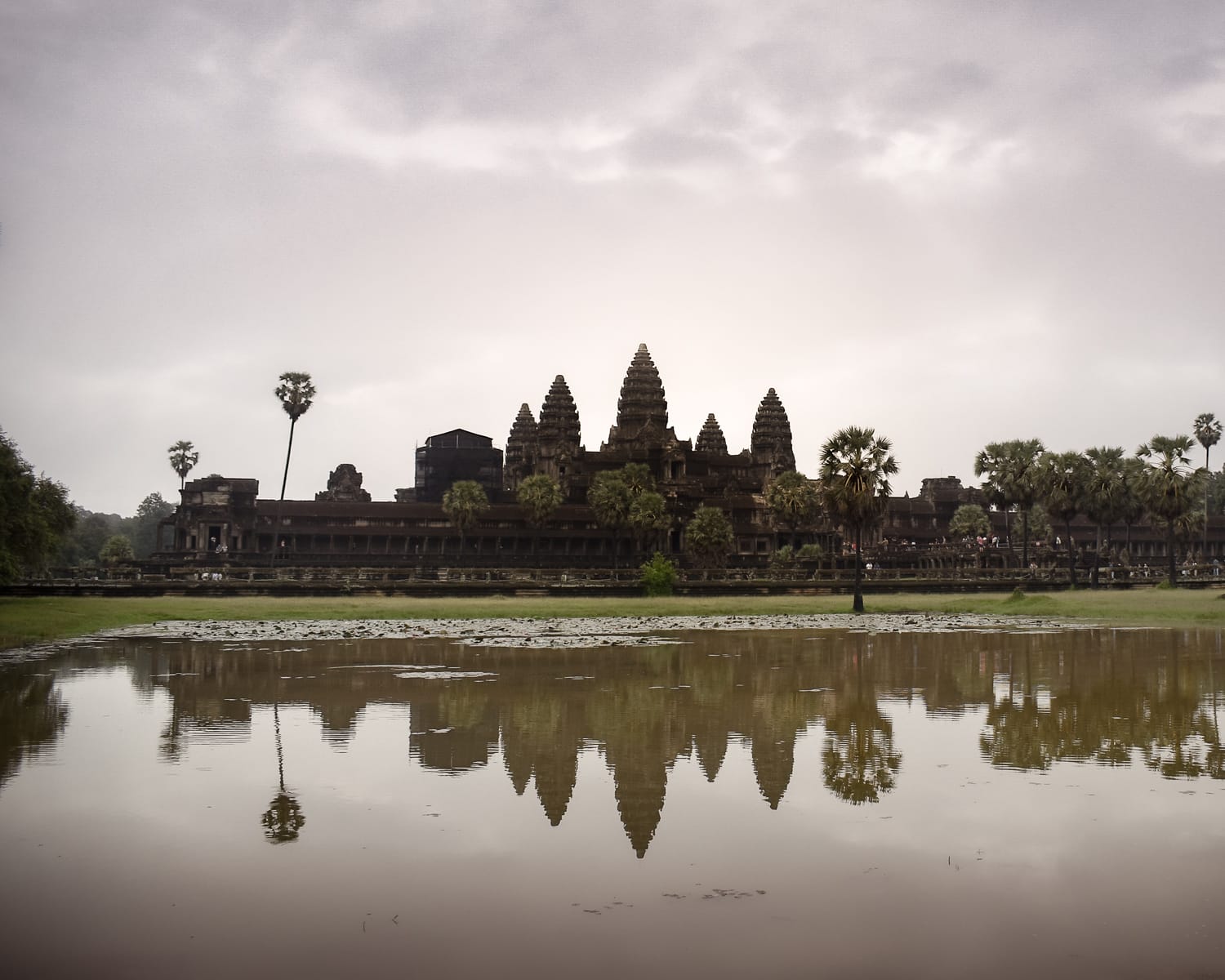
The Angkor Wat, as viewed from the northern lotus pond

It is indeed the largest temple in the world!

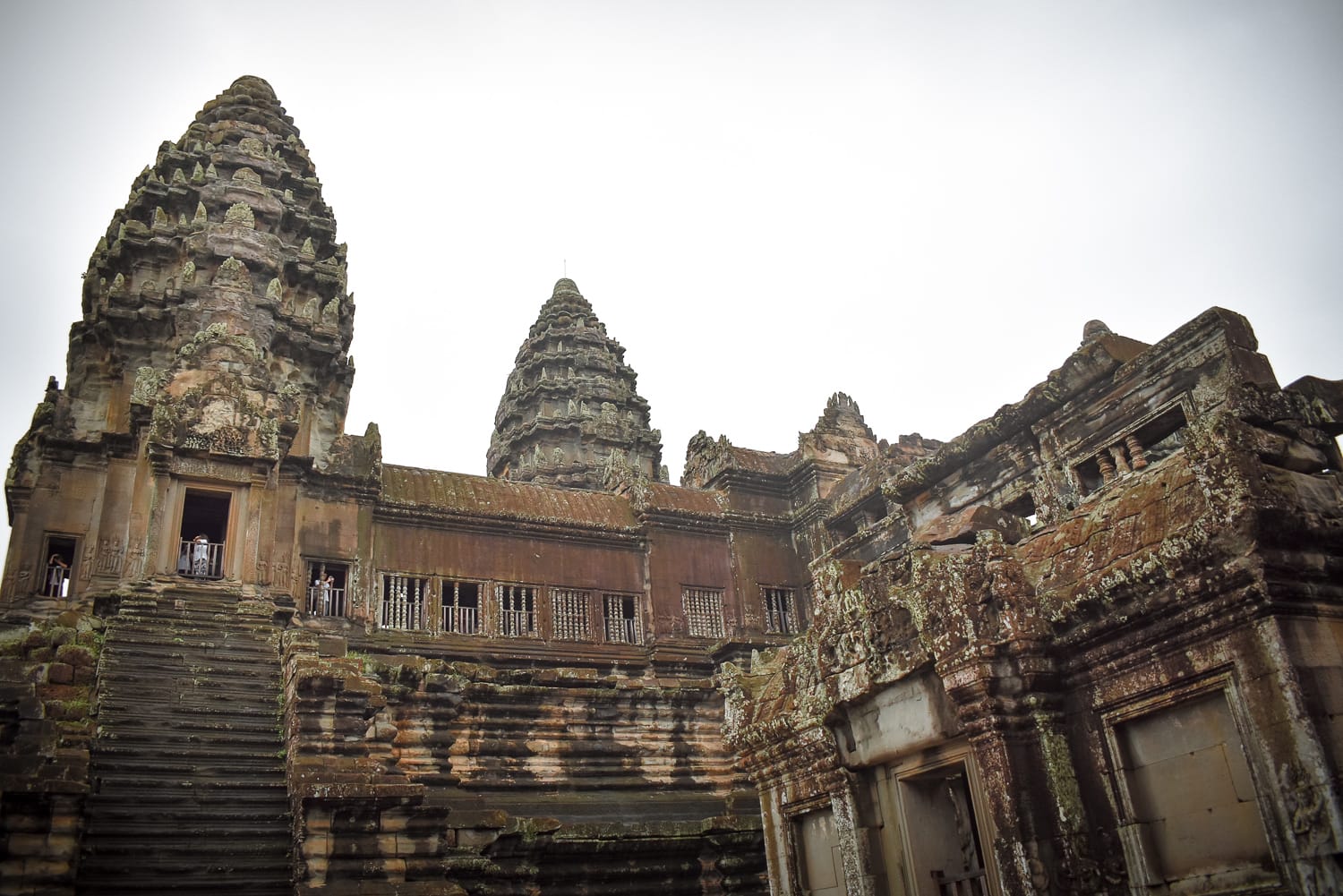
It was built in the late 12th century as a state temple by King Suryavarman II, in honour of the Hindu God Vishnu. Despite standing through eight centuries, this prodigious structure has survived with minimal damage. And, the Cambodian government has been working relentlessly to maintain the good condition of the temple. The temple has multiple levels of enclosures and three main towers. The west facing temple has an artificial pond on either side of its entrance, with libraries on the outer corners of the ponds. It is almost impossible to not be overwhelmed by the sheer size and beauty of the monument! 

Even today, it’s not uncommon to find a monk sitting inside one of the temple’s many corridors. They go about their worship and rituals despite hundreds of visitors walking around the courtyards and queuing up on stairs to the enter the higher enclosures.

The pathway to the sanctum on the third tier

It is easy to spend hours admiring the Angkor Wat, so its best to start early in the morning. That way, you can also catch the famous sunrise behind the temple. For the best pictures, the popular spot is the northern pond, but it can get extremely crowded at sunrise. Just after sunrise, it gets deserted within minutes and you can comfortably capture the temple in all its glory!

The Angkor Wat is only one of the many temples in the city of Angkor. It is estimated that there are over 1000 temples in the area. Of course, only a few are actually famous on the tourist circuits. Most hotels and operators stick to a specific plan, and offer tours covering the small circuit, big circuit and the grand circuit of the Angkor Temples. But these plans may not always work to your advantage when you are interested in spending more time at specific temples. Or even if they do, how do you know which temples you MUST visit and which ones you can skip?

Here’s a list that you can keep in mind, whilst planning for your Temple Run!

The entrance arch of the Prasat Ta Som

Ta Som: 

Ta Som is a small jungle temple, about 12 kms from Angkor Wat. It had been unrestored and neglected for a long period of time, until the late 90s when it was finally decided to make it safe for visitors. The entrance arch itself is quite mesmerising, and is followed by a walkway into the Sanctum, with parts of the temple scattered as rubble and covered in vegetation. The balusters lend a reminder of the effort that went into design each window so intricately.

You could expect to spend a minimum of a half hour here. And its worth it!

Prasat Ta Prohm, a large jungle Temple

Ta Prohm:

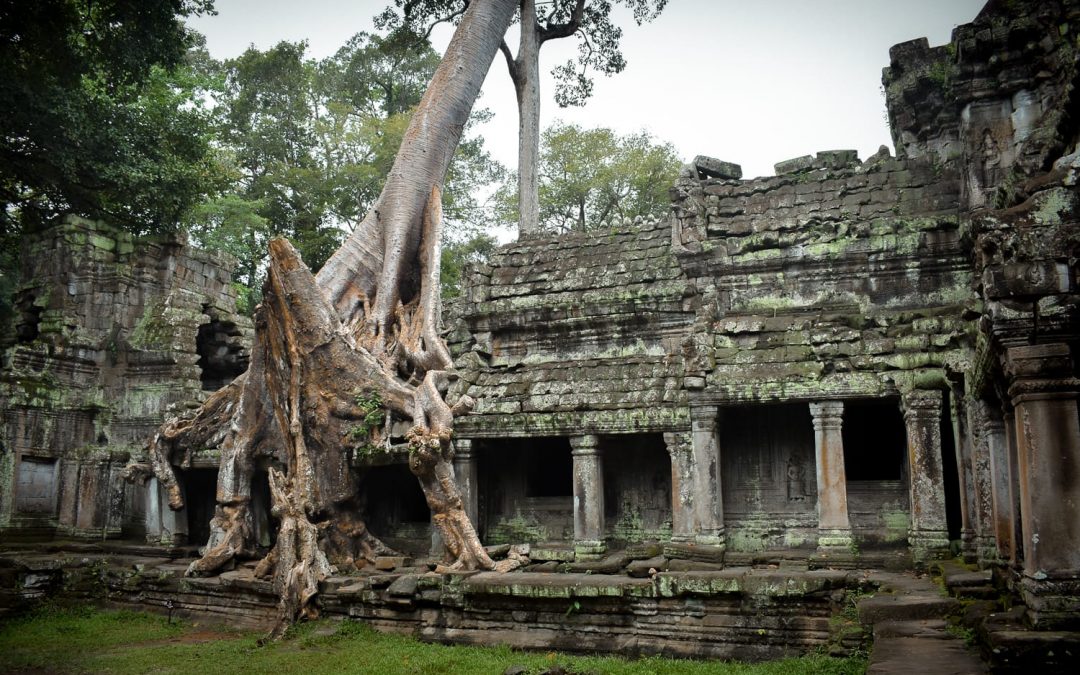
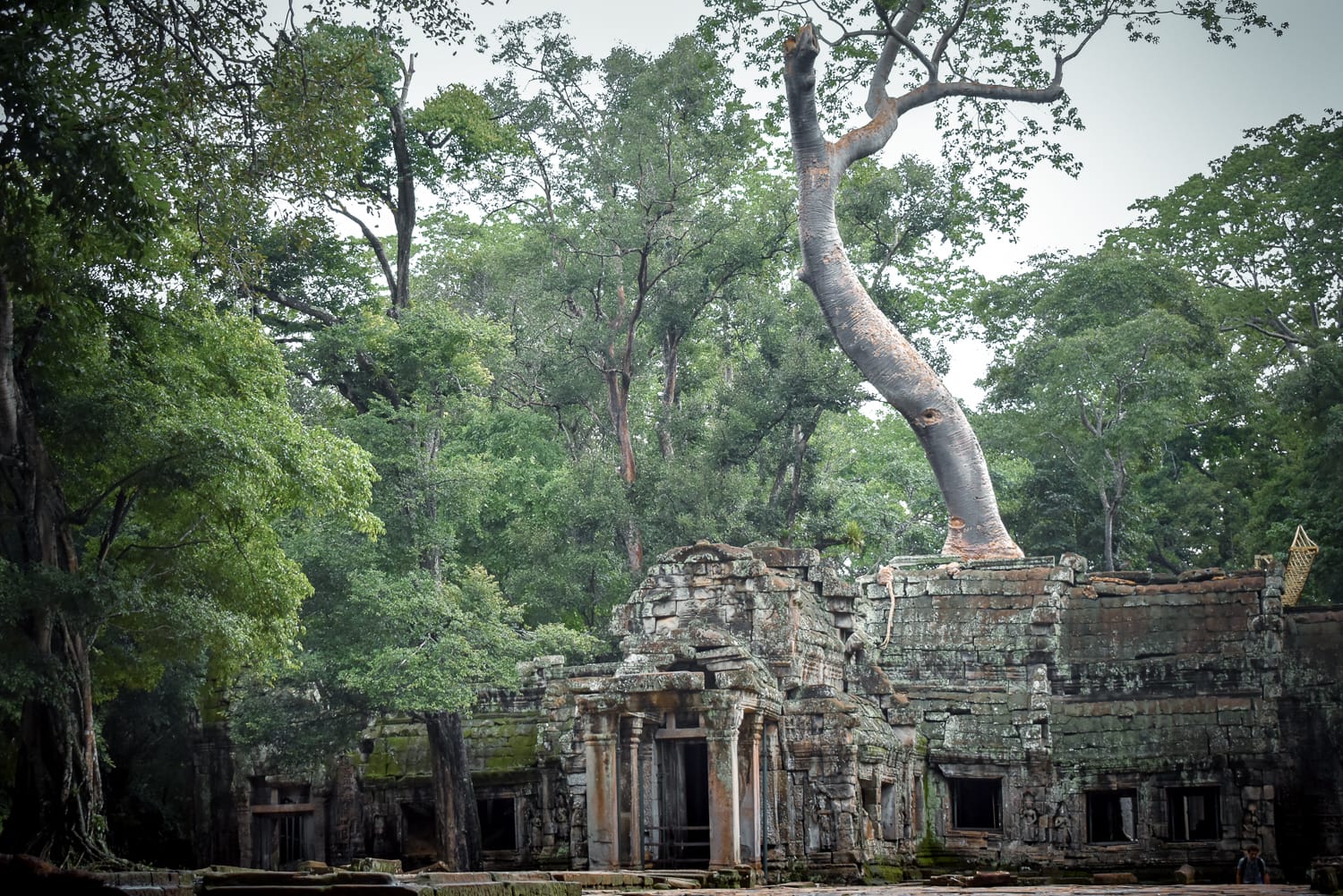
If you have watched the movie ‘Lara Croft: Tomb Raider’, you will know what we are talking about! The towering fig tree growing out of the decrepit walls and the lush forests all around are enough to turn the clock backwards into a lost era. This temple has remained mostly in the same state as it was discovered. For the last couple of years, the Archaeological Survey of India has been working to restore the dilapidated parts of the temple making it much safer for visitors to explore it. 

Devote at least two hours to explore the ruins comfortably.

Prasat Preah Khan is quite large and enchanting

Preah Khan: 

Meaning “holy sword”, Preah Khan is a very mystical temple, with the enormous tree hugging the stone walls, the moss growing on the roof and pillars, and the faded red sandstone walls inside the temple. There is also a big linga (a phallic structure) inside the sanctorum. The temple was built in honour of Gods Vishnu and Shiva, and later became a Buddhist shrine. The best way is to enter the site from one side (east or west) and walk into the temple and walk out the other side, and have your tuktuk driver meet you there.

You could spend at least an hour here, lost in admiration.


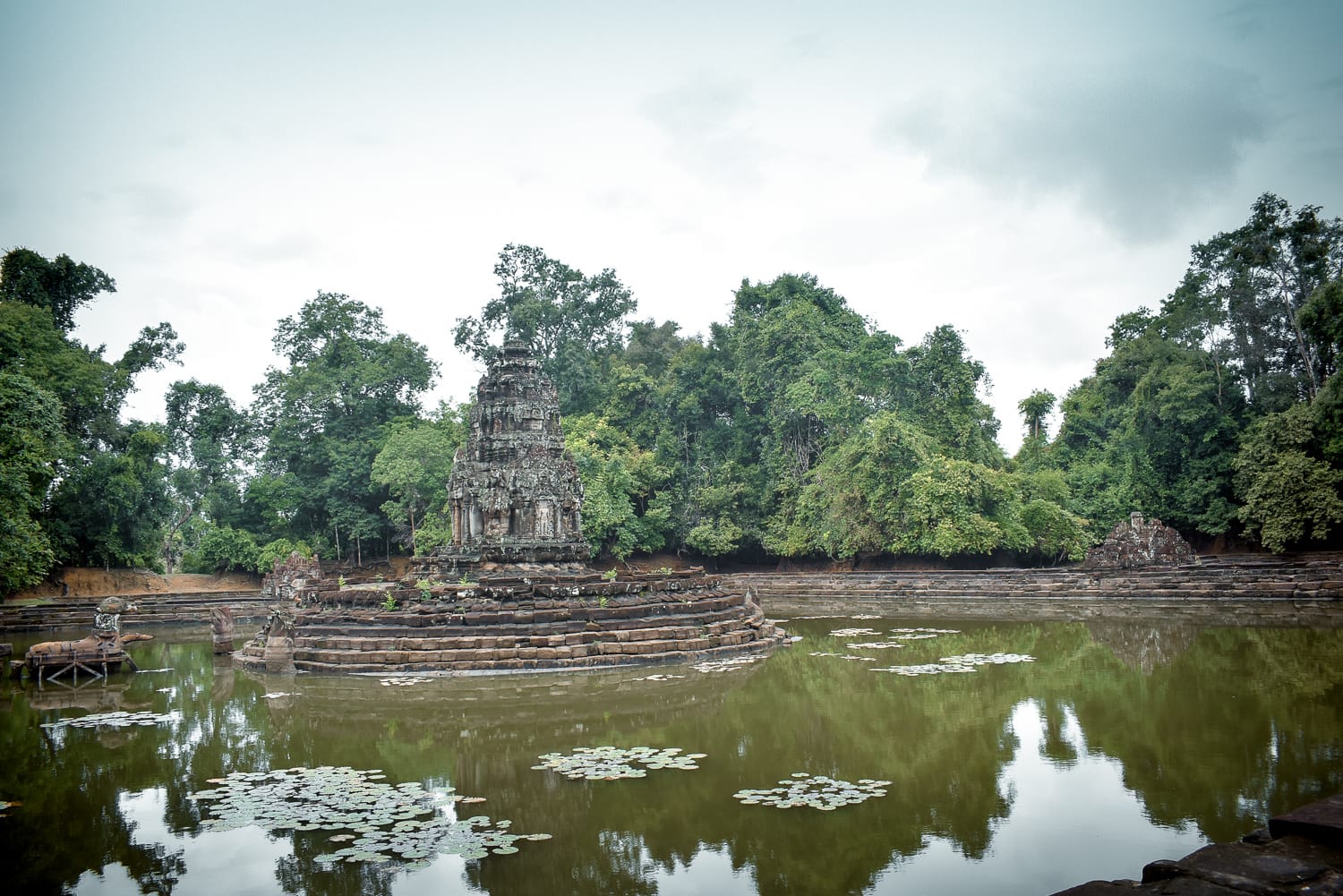
The island temple of Neak Pean 

Neak Pean:

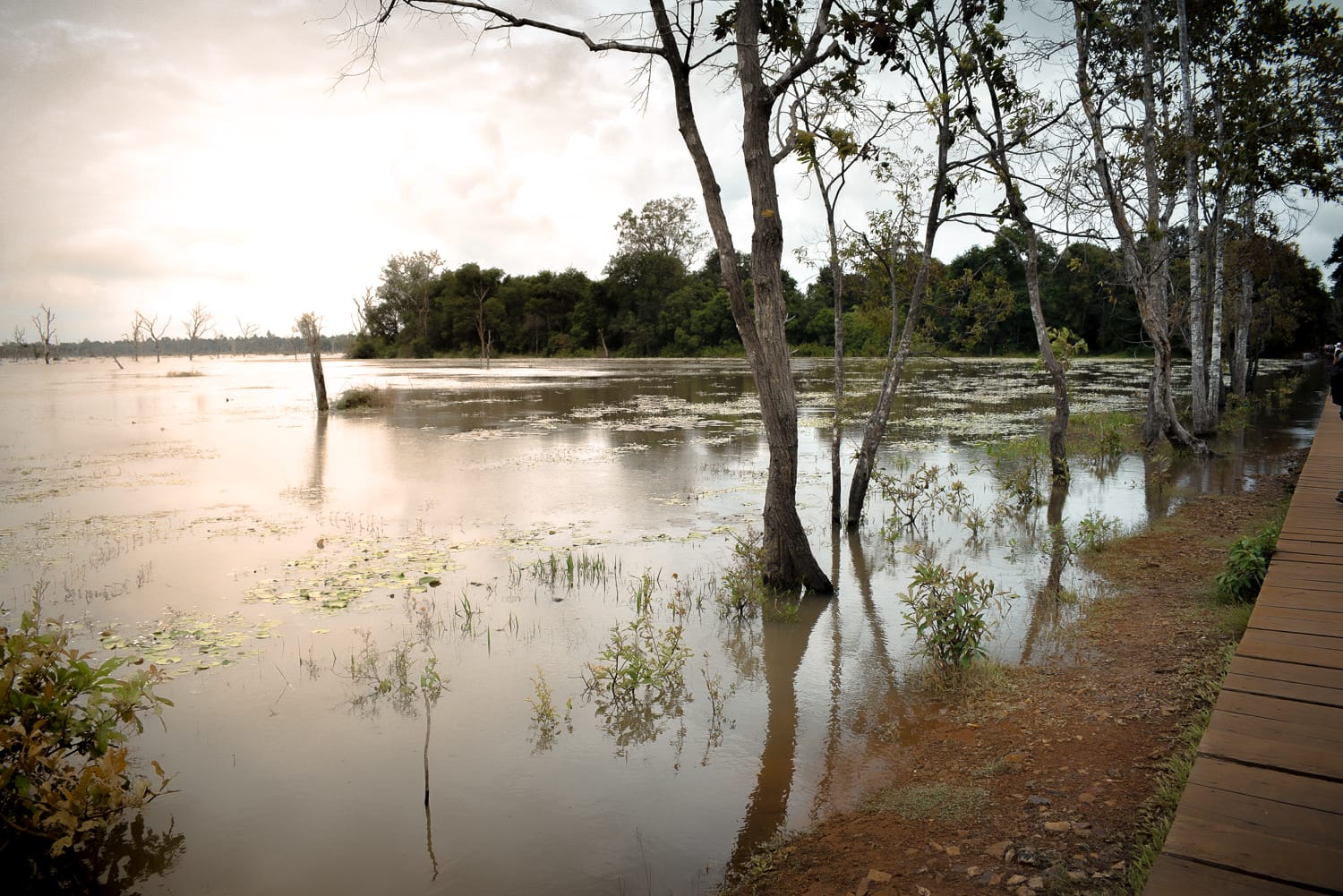
In the vicinity of the Preah Khan Temple is an artificial island created by the Khmer dynasty. Called as Neak Pean (“The entwined serpents”), it includes a small Buddhist temple built within a small pond on the island. The walk from the main entrance to the small island is enjoyable, the pathway is no more than 3 feet wide with shallow waters of the lake on both sides stretching far beyond. You might also hear some soft, traditional Khmer music being played by the survivors of land mines sitting in a little tent over the water!

A half hour of your time is good here, but it is often skipped if you do not have enough time for other, more interesting temples.

The pathway to Neak Pean

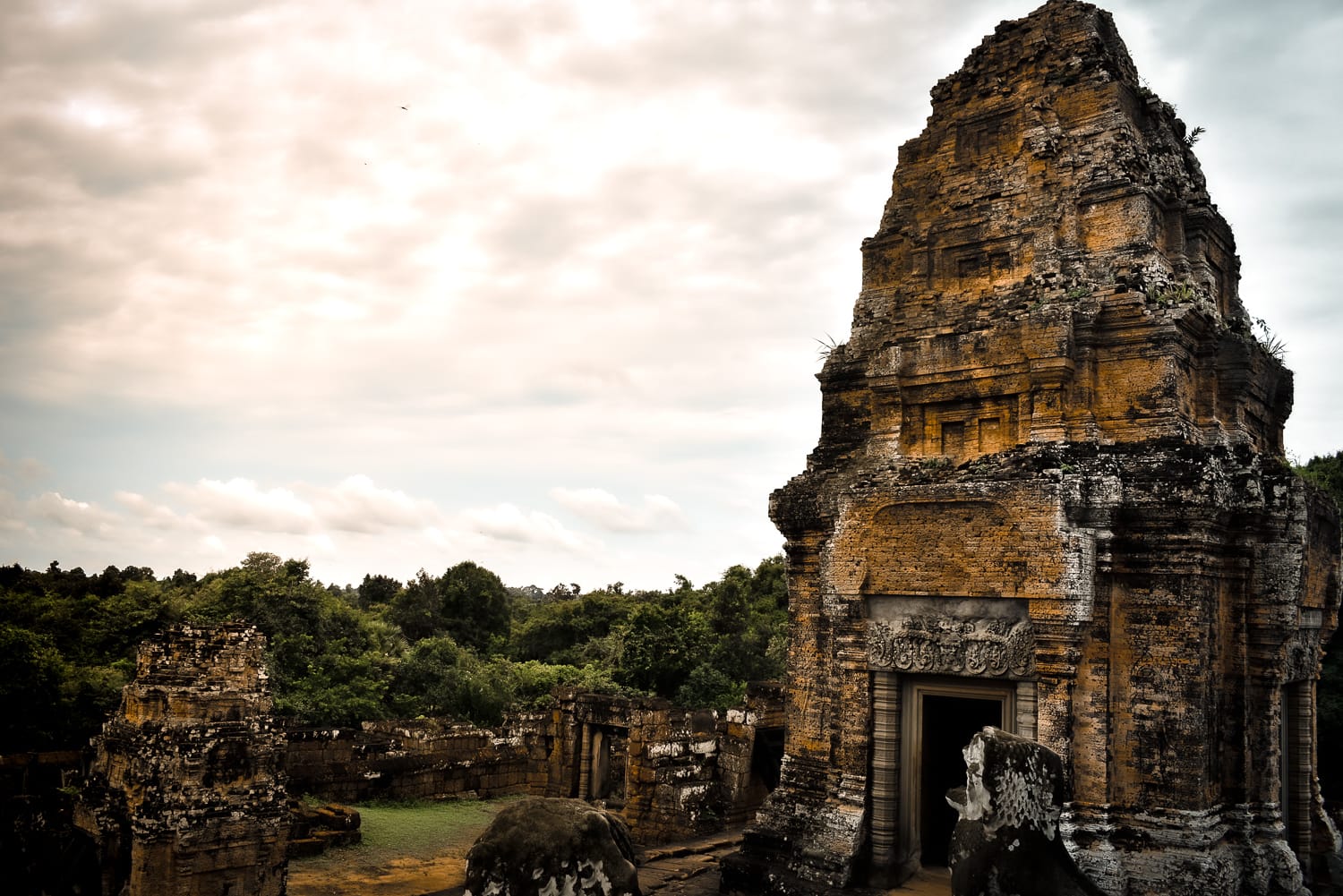
The doorway to the Sanctum of East Mebon

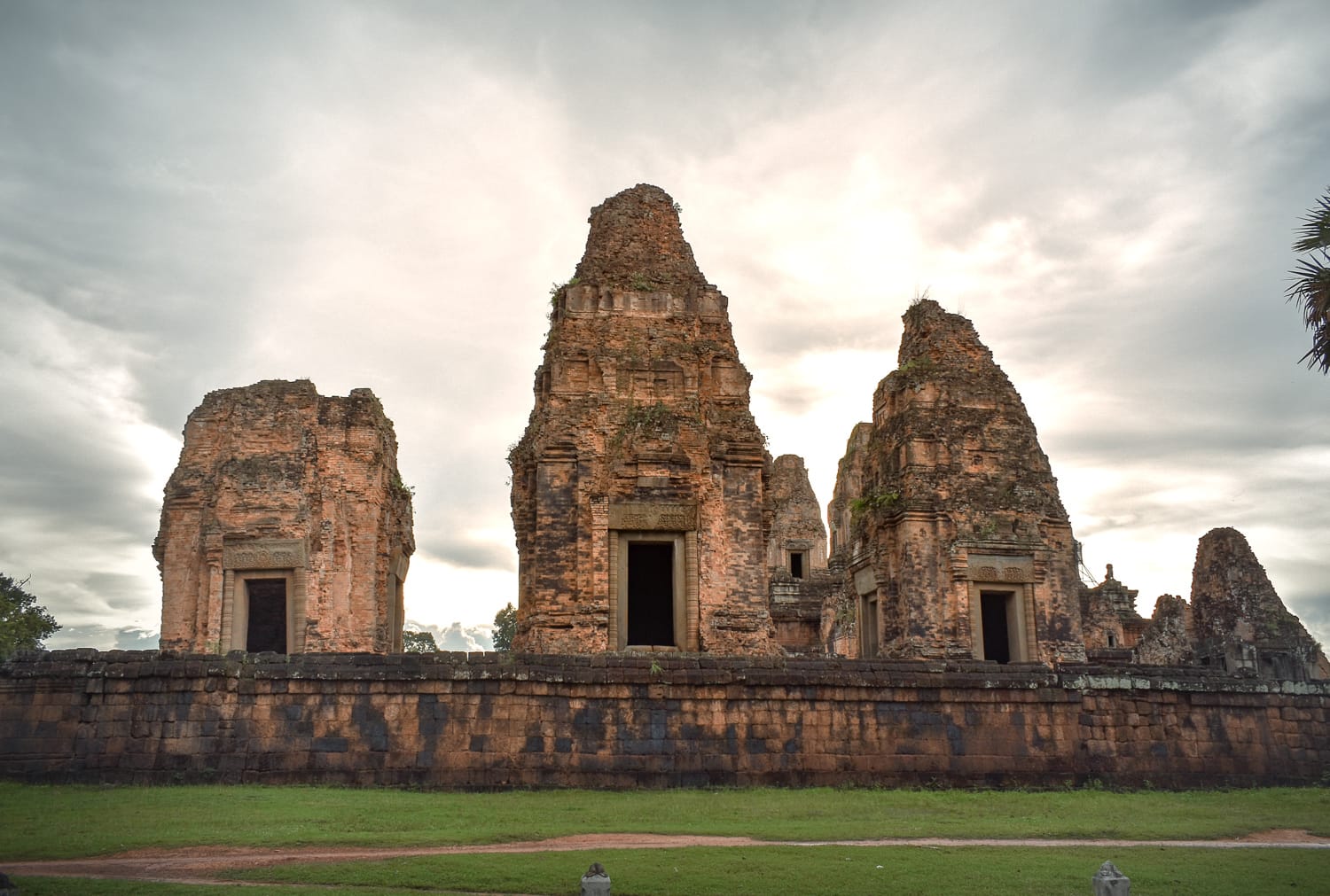
East Mebon:

The legendary East Mebon, just a couple of kilometres away, is another must-visit. It is very close to the much larger Pre Rup temple and the design is also quite similar. Built in honour of Lord Shiva, it was once surrounded by a vast expanse of water. The red sandstone temple which is set at the top-centre of the three-tiered complex is still open for worship. There is a beautiful idol of Buddha inside, with incense sticks burning gently all day long. The East Mebon isn’t in the best condition, when compared with other temples, but its definitely worth visiting.

Expect to spend an hour here.

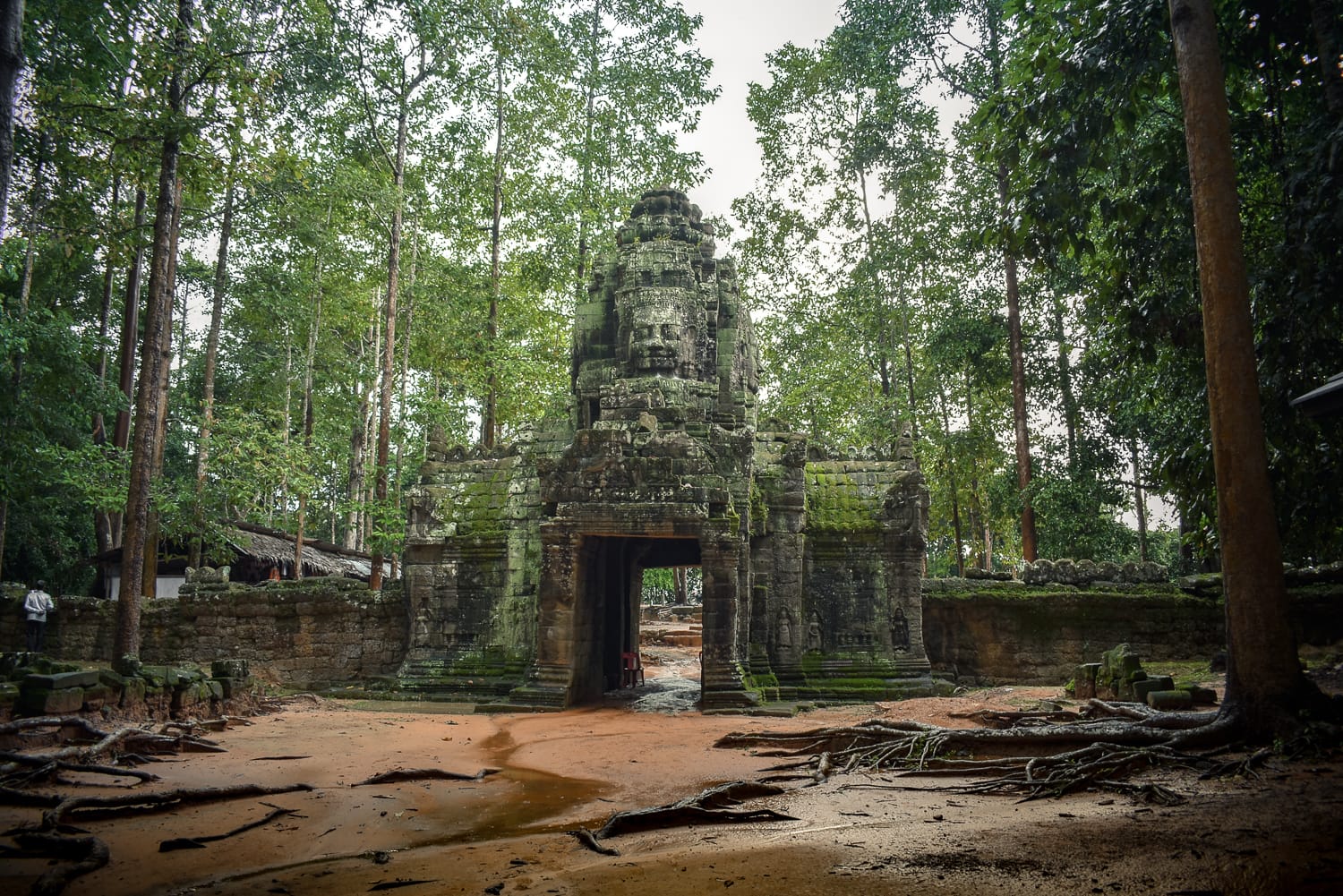
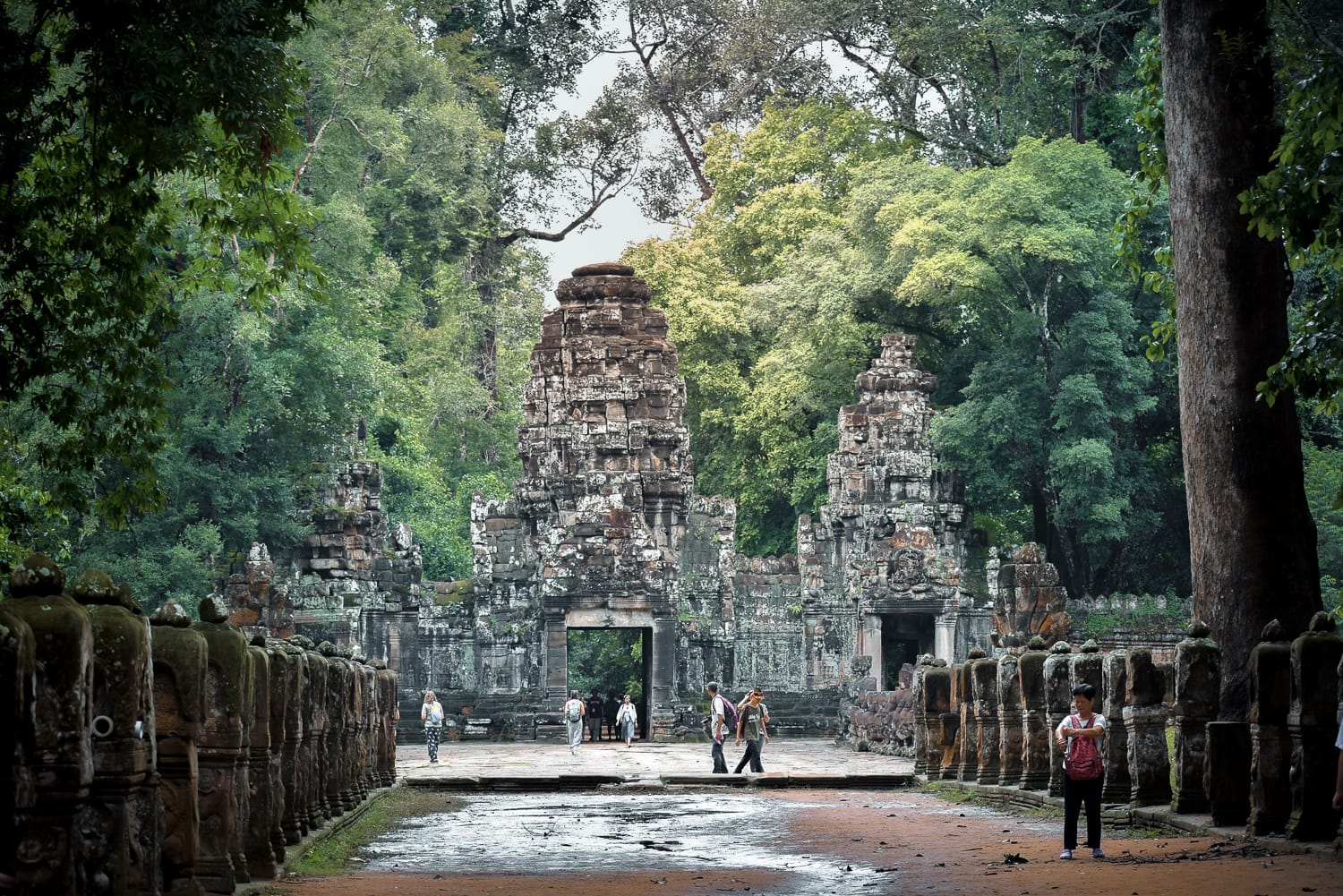
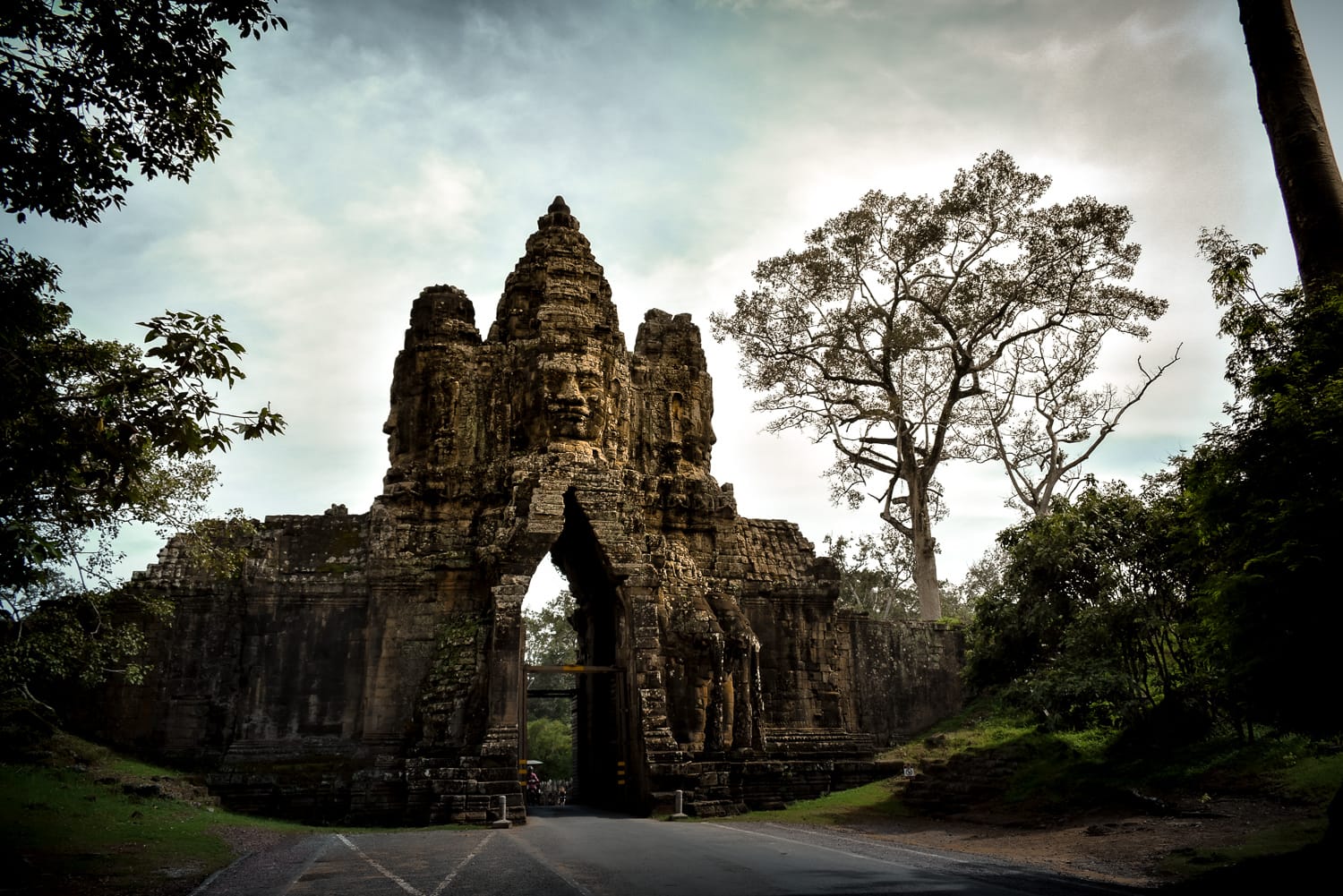
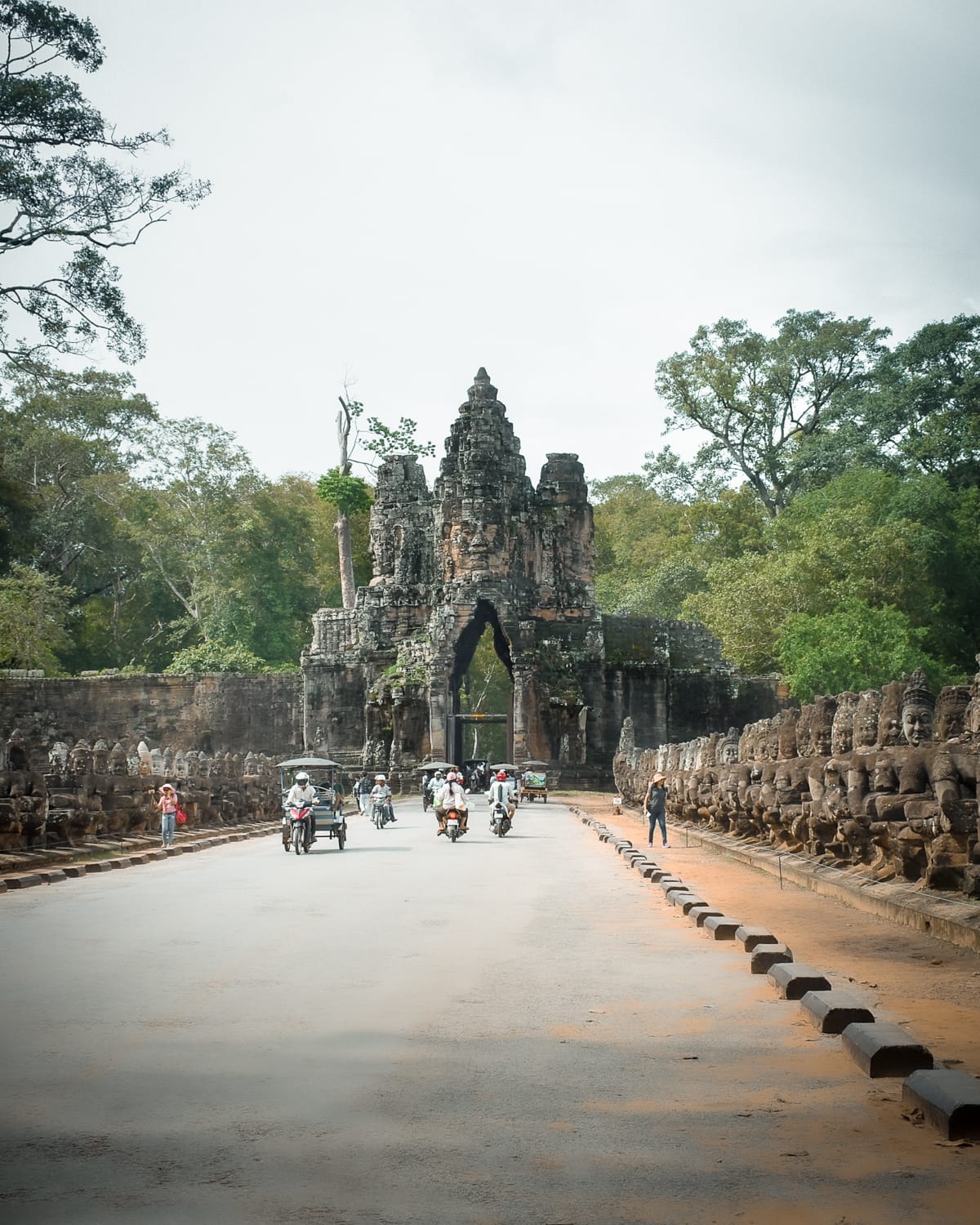
The massive arch at the entrance to the walled city of Angkor Thom

Pre Rup:

The Angkor Thom is the last capital city built by the Khmer empire. And you should NOT miss this! The entrance to the city is a tower with the face of the guardian entities, with a moat on either side. Once past the entrance, the lush green vegetation comes into view and in the midst of all this are the Bayon, Baphoun temples and other Royal buildings.

The massive arch at the entrance to the walled city of Angkor Thom

Angkor Thom:

The Angkor Thom is the last capital city built by the Khmer empire. And you should NOT miss this! The entrance to the city is a tower with the face of the guardian entities, with a moat on either side. Once past the entrance, the lush green vegetation comes into view and in the midst of all this are the Bayon, Baphuon temples and other Royal buildings.

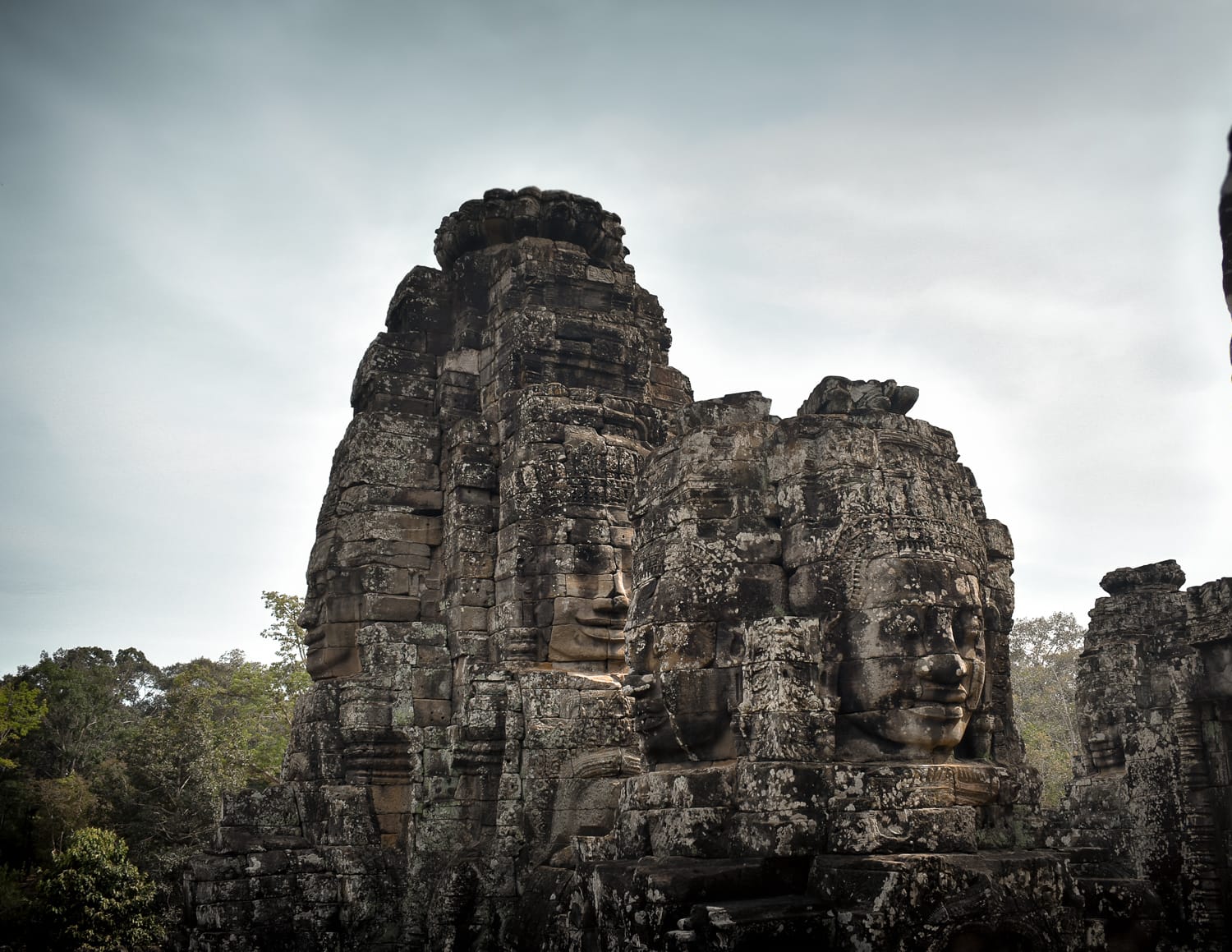
The ruins of Bayon are truly captivating

Bayon:

The carvings of the Bayon deity on the 57 stone towers are beyond marvellous, for it is very hard to believe that something so detailed has stood for nearly a millennium! Each tower has four faces, each in one direction. The temple is chaotic, charming and very mystical.

There are many steep flights of stairs leading down to different corridors and chambers, so it’s best to devote at least two hours to exploring the Bayon. It is one of the most crowded temples after the Angkor Wat, yet, we wouldn’t suggest that you skip this for any reason!

The faces of Bayon are said to represent the God Avalokiteshwara

The Hill Temple of Baphuon

Baphuon Temple: 

Just next door to the Bayon, is the Baphuon temple. There is a pathway between an ancient pond leading to the main temple complex. It is a much taller temple, with multiple levels and a steep, long stairway to get to the top, but is definitely worth climbing. Comprising three tiers (levels), the temple was built in honour of Lord Shiva, but later converted into a Buddhist shrine.

TIP: After visiting the Bayon temple, it is best to take a small break before going into the Baphoun, since it can get tiring. But since the Baphoun has far fewer visitors, it can be explored more comfortably. It normally takes at least two hours to explore the temples, the palace and the terraces. You can also check out the Phimeanakas (“Celestial temple”) inside the royal palace, the Terrace of the Leper King and the Terrace of the Elephants around the Baphoun.

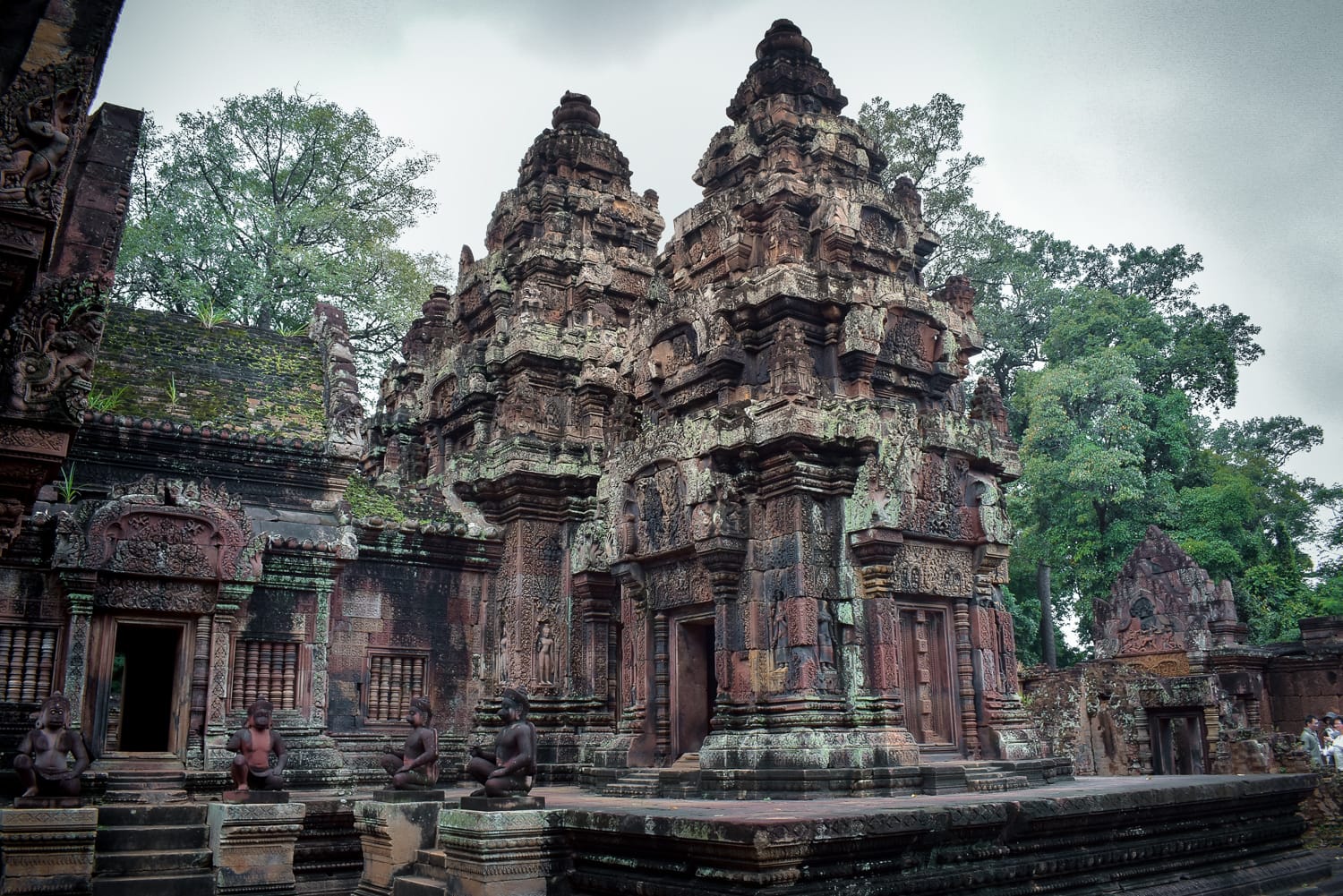
The intricate carvings of Banteay Srei

Banteay Srei:

The legendary Banteay Srei is about 40 kilometres away from the town, through the serene countryside.

The temple walls were built with red sandstone originally. Over time, the elements of nature have softened the colour to more delicate hues of amber and pink. Its intricate carvings depict many stories from the era of the Mahabharata. Just like the Bayon, it is hard to believe that the sharp designs of every carving have withstood harsh effects of wind and rain. It is observably smaller than the other Angkor temples, but it is often praised as the “Jewel of Khmer Art” and you can see why. This temple should definitely be on your list, even though it is outside the regular Angkor circuit.

Spare at least an hour to explore the temple, which can get a tad crowded sometimes. It takes about 30 mins to reach the temple from Siem Reap.

The perfect symmetry at the Angkor Temples is thought provoking

Bakong:

This temple is further down south, closer to the modern town of Siem Reap. It is far less crowded than most Angkor temples. When we visited, there was a lot of restoration work underway, but nevertheless, it was just as enchanting as the other temples. The multiple levels of the temples represent the structure of a hill and is reminiscent of the concept of hill temples that was prominent under Khmer rule. is the last capital city built by the Khmer empire.

You could spend a half hour here before heading back into town.

The lost temple of Beng Mealea brings out the Indiana Jones in every visitor

Beng Mealea: We saved the best and most legendary temple for last! 

A 60 km drive in the beautiful Cambodian countryside took us to the north-eastern Prasat Beng Mealea. It was mostly inaccessible for many years, until recently when a road was laid through the cleared jungles. It has far less visitors even now, and you can admire the ruins for countless hours!

The interiors of Beng Mealea, reclaimed from man by nature

The lush green forests, the heaps of the rubble lying all around, and the thick moss growing over the walls will take you to a whole other era. Using the wooden walkways, ducking under branches, going into dark tunnel-like corridors and exploring the ruined stone paths – this is where the Indiana Jones in you comes out to play.

The whole trip will easily take a half day, and so its best to plan your visit to Beng Mealea on a separate day, preferably in the morning half. There is a separate ticket to enter this site, and it is not covered by the Angkor Temple Pass. 

Phnom Bakheng: 

Phnom Bakheng is a small temple located on top of a hill, just outside the city of Angkor Thom. It is believed to be older than most other Angkor temples, and is often visited for its commanding views over the entire region (from where Angkor Wat and Tonle Sap are visible), and for the sunset. It normally takes a good twenty minutes to hike to the top of the hill (you can see some ruined temples lost in the forest while climbing up – wow!) and another twenty minutes to get through the queue, since only a restricted number of visitors are allowed to climb to the top of the temple. Since the site is open for a little longer than most other sites, you can comfortably visit Phnom Bakheng in the evening on any day.

There are many bargain street-stalls to buy from, at the base of the hill.